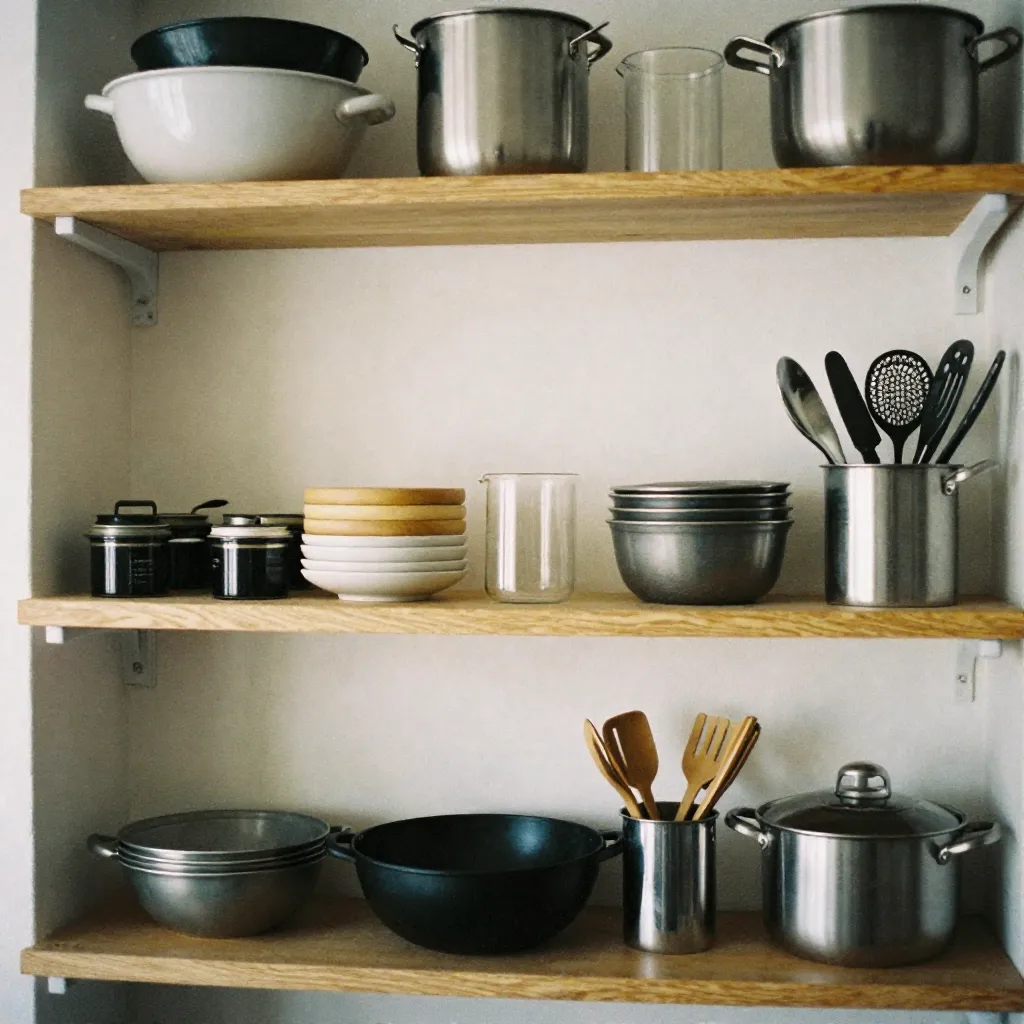
Architecture of the Wall
Technical schematics with shadow mapping for optimal visual balance
Shadow Mapping System
Each tool placement calculates its shadow projection on vertical surfaces. Our system ensures balanced negative space patterns while maintaining maximum accessibility.
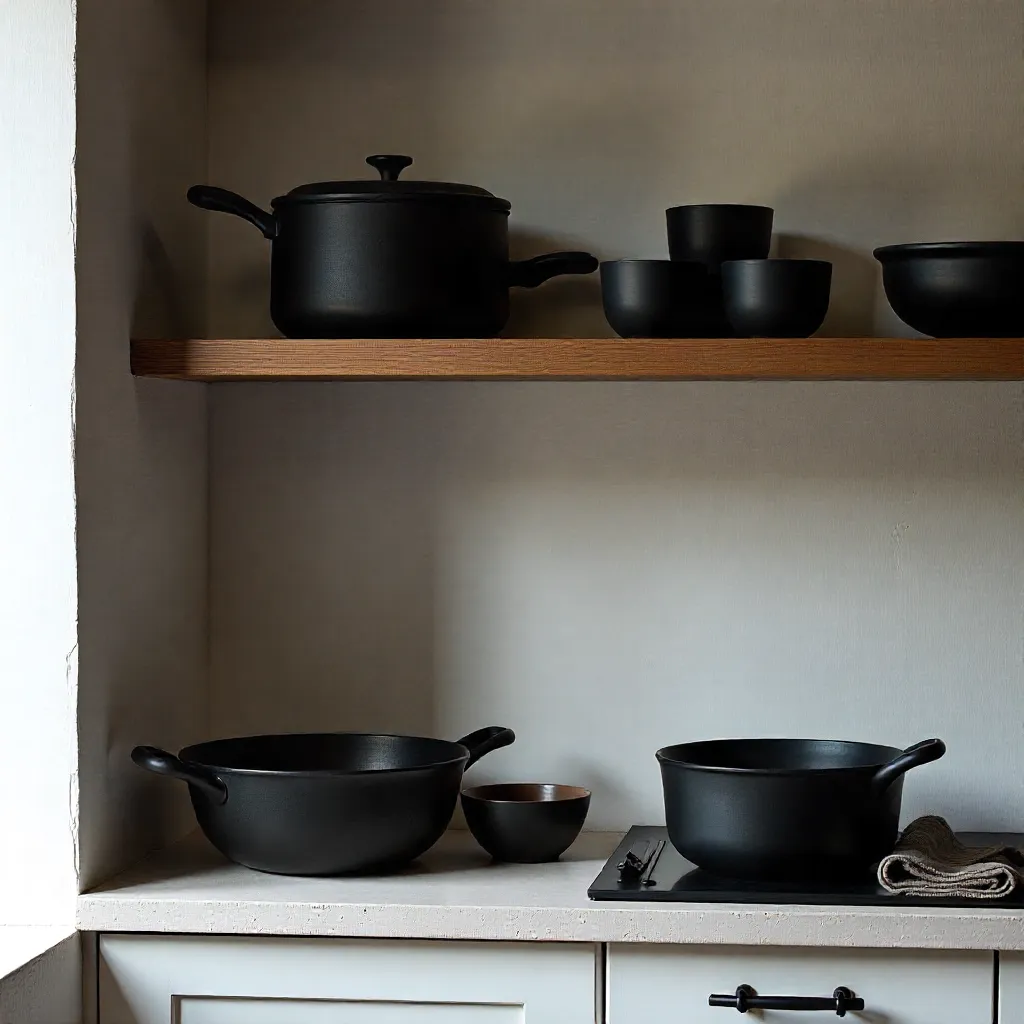
90-Degree Vertical Orientation
All tools are positioned at consistent 90-degree angles to create uniform shadow patterns. This orientation ensures predictable light interaction throughout the day.
The system accounts for natural light sources, calculating shadow angles at different times. Tools are arranged to prevent visual clutter from overlapping shadows.
Negative space between tools is calculated to maintain visual rhythm. The spacing follows a mathematical progression based on tool size and visual weight.
Structural Load Distribution
Each shelf section is rated for specific weight capacity. Heavy instruments occupy lower zones with reinforced bracket systems.

Lower Zone (0-24 inches)
Heavy tools: cast iron pans, thick-gauge steel implements, large cutting boards. Maximum load: 50 pounds per linear foot. Reinforced brackets required.

Middle Zone (24-48 inches)
Medium-weight tools: standard knives, wooden spoons, mixing bowls. Maximum load: 30 pounds per linear foot. Standard bracket configuration.
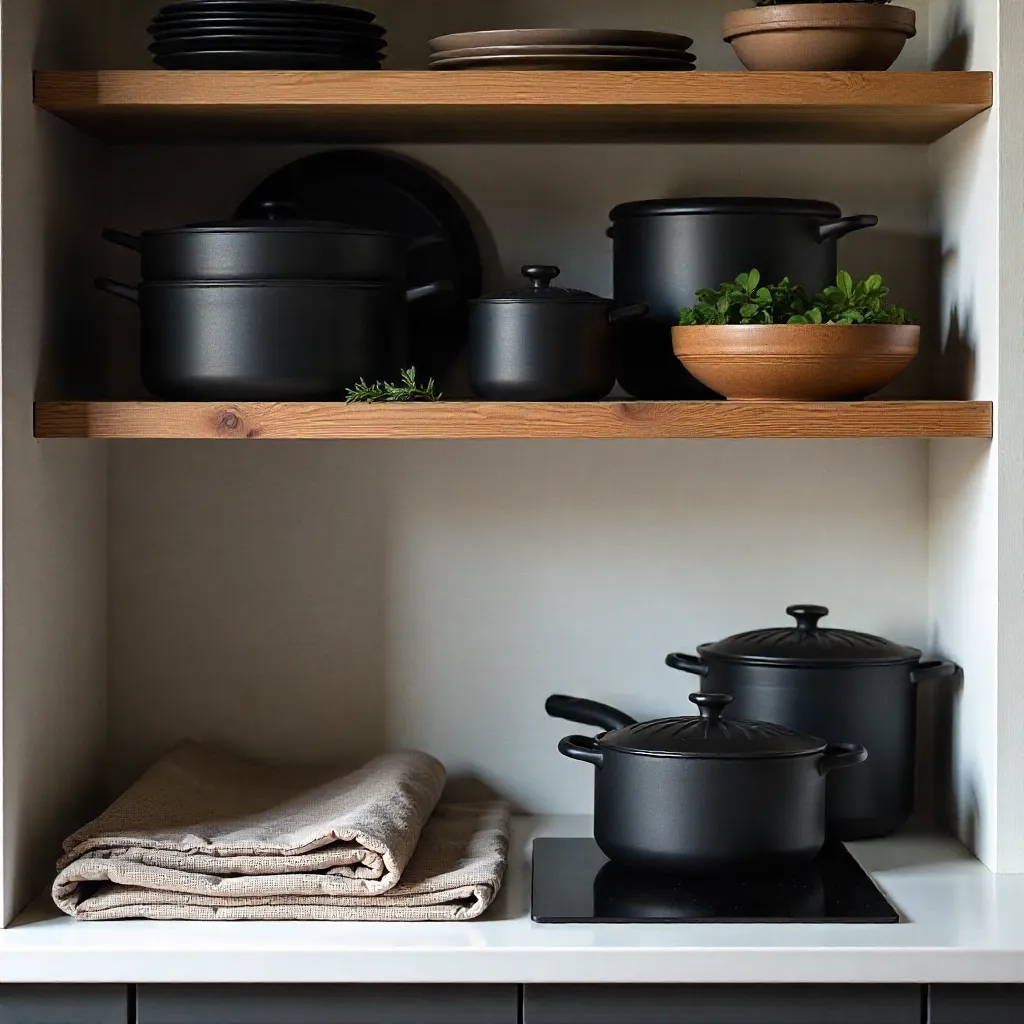
Upper Zone (48+ inches)
Lightweight tools: silicone utensils, measuring spoons, specialty items. Maximum load: 15 pounds per linear foot. Minimal bracket requirements.
Aesthetic Equilibrium Calculations
Symmetrical Distribution
Large tools are offset by smaller instruments to create visual equilibrium. The system prevents visual "heaviness" on one side of the display.
Each shelf is balanced as an independent unit, while the entire wall maintains overall harmony. Tools are arranged in visual clusters rather than uniform spacing.
Color temperature analysis groups tools by finish. Matte black PVD coatings create visual anchors, while brushed steel provides contrast and rhythm.

Ergonomic Accessibility Mapping
Primary zone (eye level ±12 inches) contains most-frequently-used tools. Secondary zones accommodate specialized instruments accessed less frequently.
Primary Zone
Eye level ±12 inches. Contains 80% usage frequency tools. Optimal reach distance: 18 inches from body centerline. No bending or stretching required.
Secondary Zone
Above and below primary zone. Contains specialized tools with 40% usage frequency. Requires minimal reaching or slight bending.
Tertiary Zone
Upper and lower extremes. Contains seasonal or specialty items with 10% usage frequency. Accessed only for specific recipes or occasions.
Bracket System Specifications
Our shelving systems use precision-engineered brackets rated for specific load capacities. Each installation includes structural analysis and reinforcement recommendations.
Request Schematic